
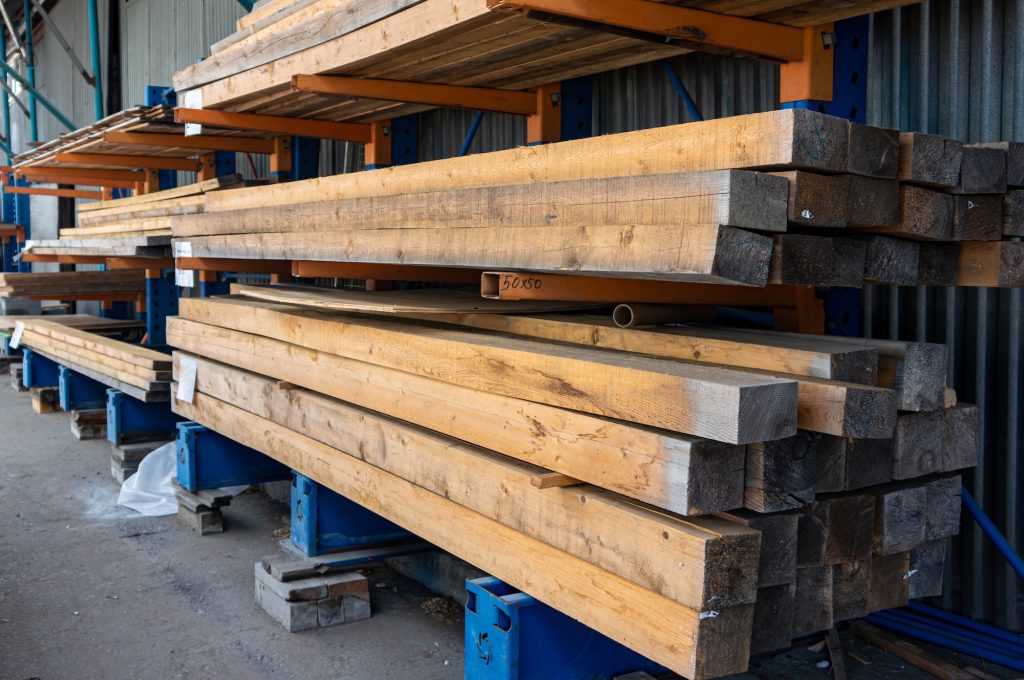
Timber grading is the process of assessing the quality and strength of timber to determine its suitability for specific applications. Grading ensures that the timber meets structural and aesthetic requirements for construction or other uses. Timber can be graded either visually or mechanically, and the grading system used varies depending on the country, standards, and intended purpose.
Types of Timber Grading
Visual Grading
In this type of timber grading system, the wood is assigned a grade based on how it looks. A trained assessor visually impacts a piece of timber and assigns a grade based on their understanding of the different elements that might affect wood’s appearance, such as the presence of knots, defects, etc. This wood grading method is particularly suitable for wood that is intended to be used for its appearance, such as interior construction.
Machine Grading
This type of wood grading system involves the use of machines. Testing machines or sensors are used to compare wood’s characteristics against predefined grading criteria and appropriate grades are assigned accordingly. This is a more accurate and faster method of wood grading, however, it is less commonly used due to its high cost.
Proof Grading
This grading system is used to re-evaluate and re-grade wood that has already been graded under either of the first two methods. This method is particularly used for construction or structural wood to ensure the wood can take the loads as defined in its grade. The method involves applying the said loads to check the wood’s strength & stiffness.
Structural Grading
Ensures timber meets strength and durability requirements for load-bearing applications (e.g., beams, joists).
Appearance Grading
Focuses on visual appeal for non-structural applications like furniture, cladding, or flooring.
Durability Grading
Assesses timber’s resistance to decay, insects, and weathering, often based on species and treatments.
Why timber grading matters
Timber grading refers to the quality and suitability of wood for different applications. Grading ensures that each piece of timber meets specific standards for structural integrity, aesthetics, and durability. Using the correct grade means your timber will have the strength and stability required for its intended purpose, which is especially important for structural applications.
What is C16 and C24 timber?
C16 and C24 are two of the most commonly used grades of timber. The C stands for conifer, the type of tree that the timber comes from (Spruce-Pine-Fir, or SPF for short) while 16 and 24 refer to the strength grade. Both grades are used in a variety of structural applications, including: rafters, floor joists, studwork for partition walls, formwork, shuttering and more. The different grades are suited to different loads.
C16-This grade is suitable for general construction uses where strength and durability are required. It’s ideal for applications like floor joists, roofing, and stud walls. C16 timber has a good balance of strength and cost-effectiveness, making it popular for both small builders and large construction firms.
C24– For projects requiring higher strength and durability, C24 is the preferred choice. It is denser and more robust than C16, making it suitable for heavy-duty applications such as load-bearing structures. C24 timber is perfect for outdoor decking frames or other structural elements exposed to the elements. While it’s a bit more expensive than C16, the added strength and longevity often make it worth the investment.
Unsorted Grade Timber
For high-quality joinery projects, unsorted timber is often the top choice. This is the highest grade of timber, typically used for applications where appearance is critical. Unsorted timber, often Scandinavian Redwood, is known for its clean, uniform finish with minimal knots and defects. It’s perfect for furniture, windows, doors, skirting boards, and other interior joinery where aesthetics and quality are paramount.
Timber grading plays a key role here at Stafford Joinery, in ensuring the right wood is used for the right purpose, with an emphasis on safety, durability, and aesthetics. For further information on any timber requirements please contact us here.